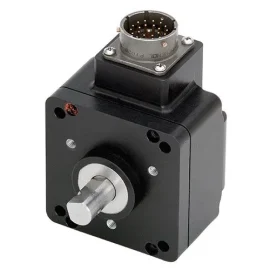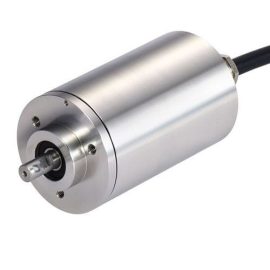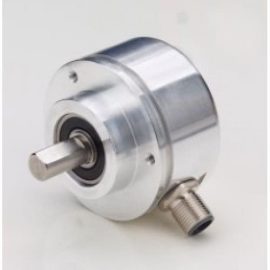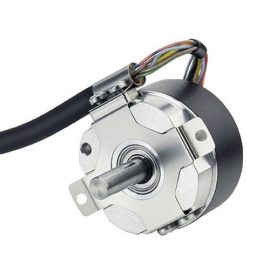
We had an enquiry from a customer running equipment inside a hazardous area classified zone, where the encoder had to be intrinsically safe and certified, but the location also had heavy wash-down and vibration, so a normal IS encoder from a general catalog would not survive there for long.
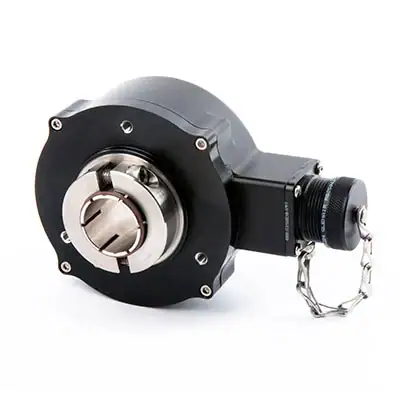
Hengstler’s ISD37 is built for this kind of extreme duty. It is an incremental encoder with a hollow bore mount (6mm up to 1″), housed in anodized aluminum, stainless steel, or nickel plated construction, sealed to IP67 for wash-down and caustic chemical exposure. It carries CE, RoHS, cULus, ATEX, and IECEx approvals, and is validated for 400G shock and 20G vibration, so it holds up on rotating machinery in oil & gas, pulp & paper, steel mill, and wind energy applications. Resolution runs from 1 to 9,000 PPR, supply voltage is 5VDC or 7-26VDC, and output interfaces include open collector, open collector with pull-up, push-pull, and DLD 7272, with dual isolated outputs available for redundancy. Operating temperature is rated -40°C to +80°C, with storage up to +100°C.
From our experience, before we quote this, we would normally check the hazardous area zone classification and the IS barrier being used, the exact hollow bore size and shaft tether arrangement, the required PPR and output type, and the housing material needed for the chemical or wash-down exposure on site. Hope this helps.