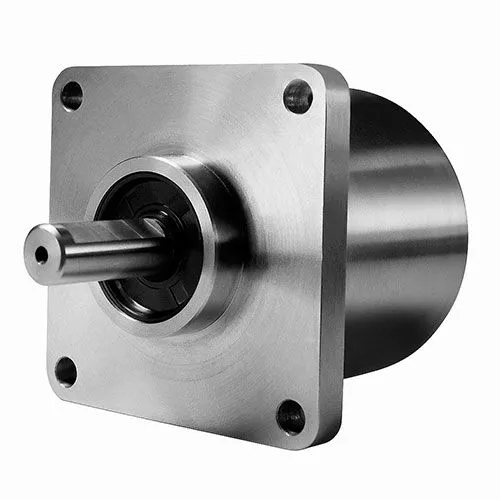
We had an enquiry from a customer with equipment on an offshore platform – a winch/cable-laying setup – needing an absolute encoder that could survive constant salt spray and washdown without corroding. Their previous encoder had already rusted through the housing after a couple of years.
This looks simple, but offshore and marine equipment is brutal on standard encoder housings. Salt spray gets into seams and seals over time, and a standard aluminum housing will corrode long before the encoder’s electronics actually fail.
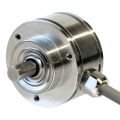
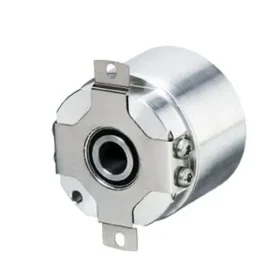
In actual application, the Hengstler ACURO AC59 is built with a stainless steel housing specifically for this kind of environment – oil and gas, marine fittings, food industry, packaging, and offshore applications like derrick cranes, winches and cable-laying equipment. It’s a compact 58mm encoder with optical scanning, IP67 rated, available in single-turn and multi-turn versions with resolution up to 34 bits (22-bit single-turn, 12-bit multi-turn). It comes with a solid shaft (9.52mm or 10mm), and a choice of interface – BiSS, SSI (Binary or Gray code), or Parallel output, with cULus and CE approvals.
From our experience, before we quote this, we would normally check the exact shaft size, interface type (BiSS/SSI/Parallel), and whether single-turn or multi-turn resolution is needed for the application. Hope this helps.