E+E EE260 Heated Humidity and Temperature Probe for Meteorological Applications
Weather stations and road and airport warning systems must measure reliably in fog, rain and permanently high humidity. The E+E EE260 uses a dual heating system to keep its humidity measurement accurate and fast in exactly these conditions.
How It Works
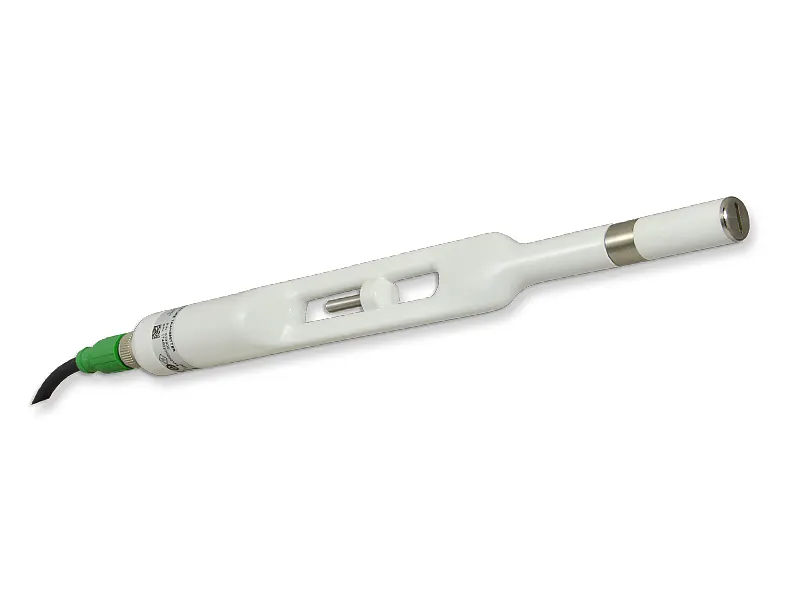
Both the RH sensing element and the probe itself are heated, preventing condensation on the sensing element, sensing head and filter cap. This also gives a very short response time and fast recovery after condensation. An additional temperature sensing element sits in the same compact probe.
Key Features
- Dual heating system (sensing element and probe)
- Fast response and fast recovery after condensation
- Separate temperature element in a single compact probe
- Fits standard rotationally symmetric radiation shields
- IP67 enclosure in UV- and heat-resistant elastomer
- Two configurable voltage outputs plus RS485 (Modbus RTU)
- Calculates dew point, absolute humidity and mixing ratio
Applications
- Meteorological weather stations
- Road traffic and airport weather warning systems
- Icing hazard detection
Industries Served
- Meteorology
- Transport infrastructure
- Aviation
Frequently Asked Questions
Why does the EE260 use dual heating?
Heating both the sensing element and the probe prevents condensation and gives fast response and recovery in permanently high humidity.
Can the EE260 be used with a standard radiation shield?
Yes. Its compact design fits commercially available rotationally symmetric radiation shields.
Need help choosing the right E+E EE260 configuration? Contact Celectric for a quotation, datasheet and technical support in Malaysia.