
A pressure transducer that has drifted out of calibration rarely triggers an immediate alarm. Instead, it continues transmitting plausible output numbers (e.g., 4–20 mA or 0–10 V signals) while the underlying process conditions diverge from safe or optimal setpoints. In industrial environments, unnoticed drift can silently impair batch quality, undermine hydraulic safety interlocks, and cause regulatory compliance non-conformances.
What is Pressure Transducer Calibration?
Pressure transducer calibration is the documented verification and adjustment of an instrument's output against a traceable, higher-accuracy pressure standard across its specified measurement range (typically tested at 0%, 25%, 50%, 75%, and 100% of full span). Calibration identifies zero drift, span shift, and non-linearity errors before they cause operational downtime.
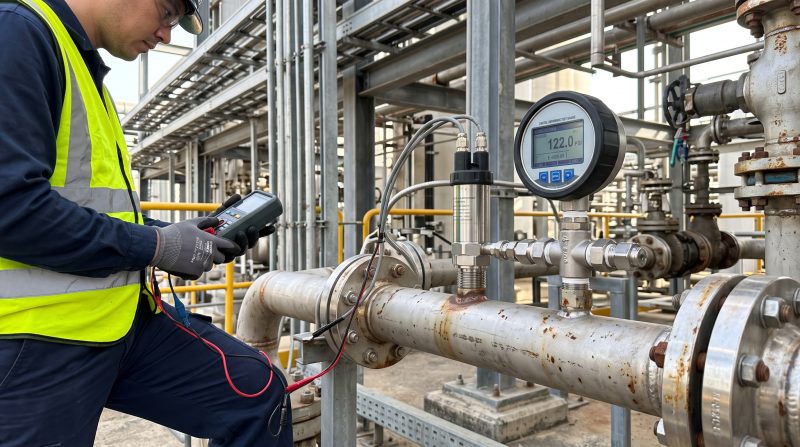
6 Early Warning Signs Your Pressure Transducer Requires Servicing
1. Constant Offset Against a Calibrated Reference Gauge
2. Excessive Thermal Shift After Process Temperature Changes
3. Sluggish Response or "Sticky" Signal Changes
4. Baseline Zero Drift Under Atmospheric Venting
5. Discrepancy Between Redundant Sensors on Identical Lines
6. Exceeded Time-Based Calibration Interval
Warning Sign Diagnostic Matrix
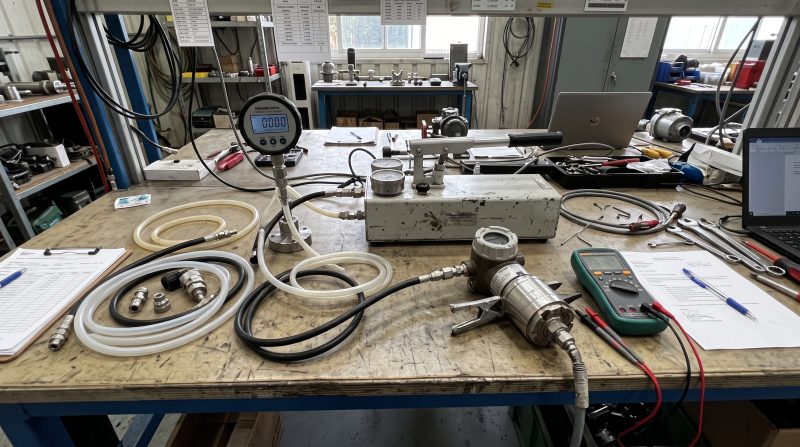
On-Site vs. Off-Site Calibration: Which Method Fits Your Skid?
Selecting the right servicing pathway depends on physical accessibility, process downtime costs, and compliance mandates:
On-Site (In-Situ) Calibration
Off-Site (Laboratory) Calibration
Frequently Asked Questions
How often should a pressure transducer be calibrated?
Standard industrial practice dictates calibrating critical pressure transducers every 12 months. For non-critical monitoring, intervals can extend to 24 months. High-vibration environments, sanitary steam-in-place (SIP) cycling, or aggressive slurries often warrant semi-annual (6-month) checks.
