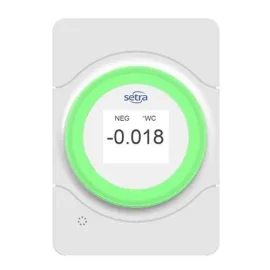
A Room Pressure Monitor is a precision instrument that measures the pressure difference between two spaces.
Positive Pressure keeps contaminants OUT (e.g., Operating Rooms).
Negative Pressure keeps contaminants IN (e.g., Infectious Isolation Rooms).
What is Room Pressure Monitoring?
Room pressure monitoring involves maintaining a “pressure gradient” between a controlled room and the surrounding area (usually a corridor). By using a highly sensitive differential pressure sensor, the monitor ensures that air flows only in the desired direction.
Negative Pressure Rooms: Containing Hazards
In a negative pressure room, the air pressure inside is lower than the pressure outside.
How it works: Exhaust fans pull more air out of the room than the supply fans push in.
The Goal: To prevent airborne pathogens, chemicals, or dust from escaping into hallways.
Common Applications: * Infectious disease isolation (AII rooms).
Chemical laboratory hoods.
Emergency waiting rooms.
Positive Pressure Rooms: Protecting the Product
In a positive pressure room, the air pressure inside is higher than the pressure outside.
How it works: The HVAC system pumps more filtered air into the room than is removed.
The Goal: To ensure that when a door is opened, air rushes out, preventing “dirty” air from entering.
Common Applications:
Operating theaters and surgical suites.
Semiconductor cleanrooms.
Pharmaceutical compounding areas.
Key Features to Look for in a Room Pressure Monitor
To meet healthcare and industrial standards (like ASHRAE or CDC guidelines), your monitor should include:
Visual and Audible Alarms: Immediate notification if pressure drops below the setpoint.
High Accuracy: The ability to measure very low pressures (often as low as 0.001 inches of water column).
BMS Integration: Output signals (4-20mA or Modbus) to connect to the Building Management System.
Touchscreen Interface: For easy calibration and status checks by nursing or lab staff.
Conclusion: Why Monitoring is Mandatory
Manual “tissue tests” or “smoke tests” are no longer enough. Automated Room Pressure Monitors provide a continuous data log and instant alerts, ensuring that your facility remains compliant and, most importantly, safe for staff and patients.