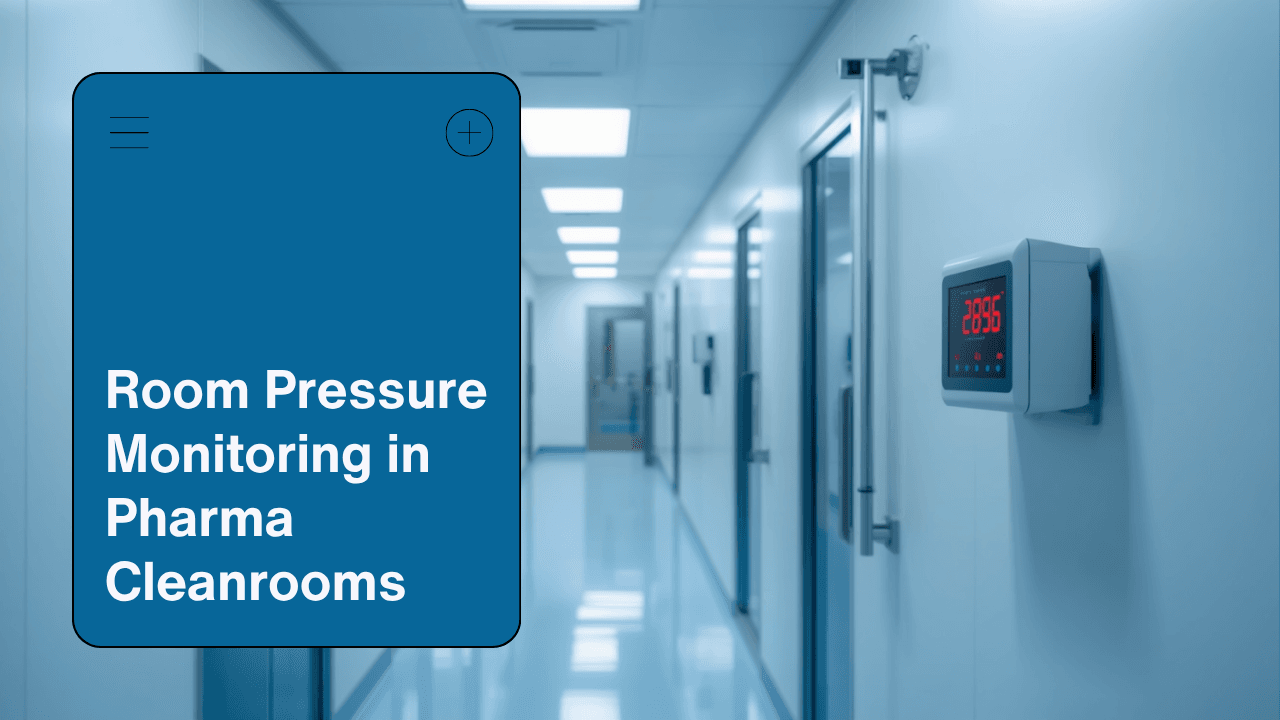
Walk into a pharmaceutical cleanroom or a hospital isolation ward and you won’t see the thing keeping everyone safe — the air itself. Contamination control in these environments depends on carefully engineered pressure cascades: air deliberately moving from cleaner spaces to less-clean spaces, or being kept out of an isolation room entirely. Malaysia’s growing pharmaceutical manufacturing and healthcare sectors have made room pressure monitoring one of the most quietly critical instrumentation categories Celectric supplies.
Why Pressure Cascades Matter
Two opposite pressure strategies protect two opposite goals:
- Positive pressure — used in cleanrooms and sterile compounding areas to keep unfiltered outside air and particulates from entering the space.
- Negative pressure — used in hospital isolation rooms to keep airborne contaminants from an infectious patient from escaping into corridors and adjacent wards.
In both cases, the pressure differential is usually small — often just a few pascals — which is exactly why the monitoring instrument needs to be sensitive and stable, not just “accurate on paper.”
Why This Is a Compliance Issue, Not Just an Operational One
For pharmaceutical manufacturers, pressure differentials between cleanroom grades are a documented part of GMP compliance, and auditors expect to see continuous records, not just a spot-check. For hospitals, isolation room pressure is tied to infection control protocols, particularly for airborne isolation. In both settings, an undetected pressure excursion isn’t just a maintenance issue — it can become a regulatory finding or, worse, an actual contamination event.
What a Good Room Pressure Monitoring System Should Do
- Continuous, real-time monitoring — not periodic manual checks with a handheld gauge.
- Local and remote alarms — so an out-of-range condition is caught immediately, not discovered during the next audit.
- Data logging with an audit trail — records that can be pulled up during a regulatory inspection or incident investigation.
- Stable, low-drift sensors — since the differentials being measured are small, sensor drift can quietly erode the accuracy of the whole system.
- Straightforward calibration verification — so facilities teams can confirm the system is still trustworthy without a major disruption.
Common Pitfalls Facilities Teams Run Into
- Door interlocks and airflow behavior that weren’t accounted for when the monitoring points were originally placed.
- Sensors that have drifted out of calibration without anyone noticing, because there was no independent verification schedule.
- Monitoring systems installed but never connected to a building management or alarm system, turning them into a display no one is watching.
Buying Through Celectric
Celectric supplies room pressure monitoring systems and the underlying pressure sensing technology (including Setra) to pharmaceutical, healthcare, and cleanroom facilities across Malaysia, along with on-site and off-site calibration services to keep those systems audit-ready. If you’re specifying or upgrading a room pressure monitoring system, our technical team can help you match the right sensitivity and alarm configuration to your facility’s requirements — browse our room pressure monitoring range or get in touch directly.
